


Call us: 07450 483941
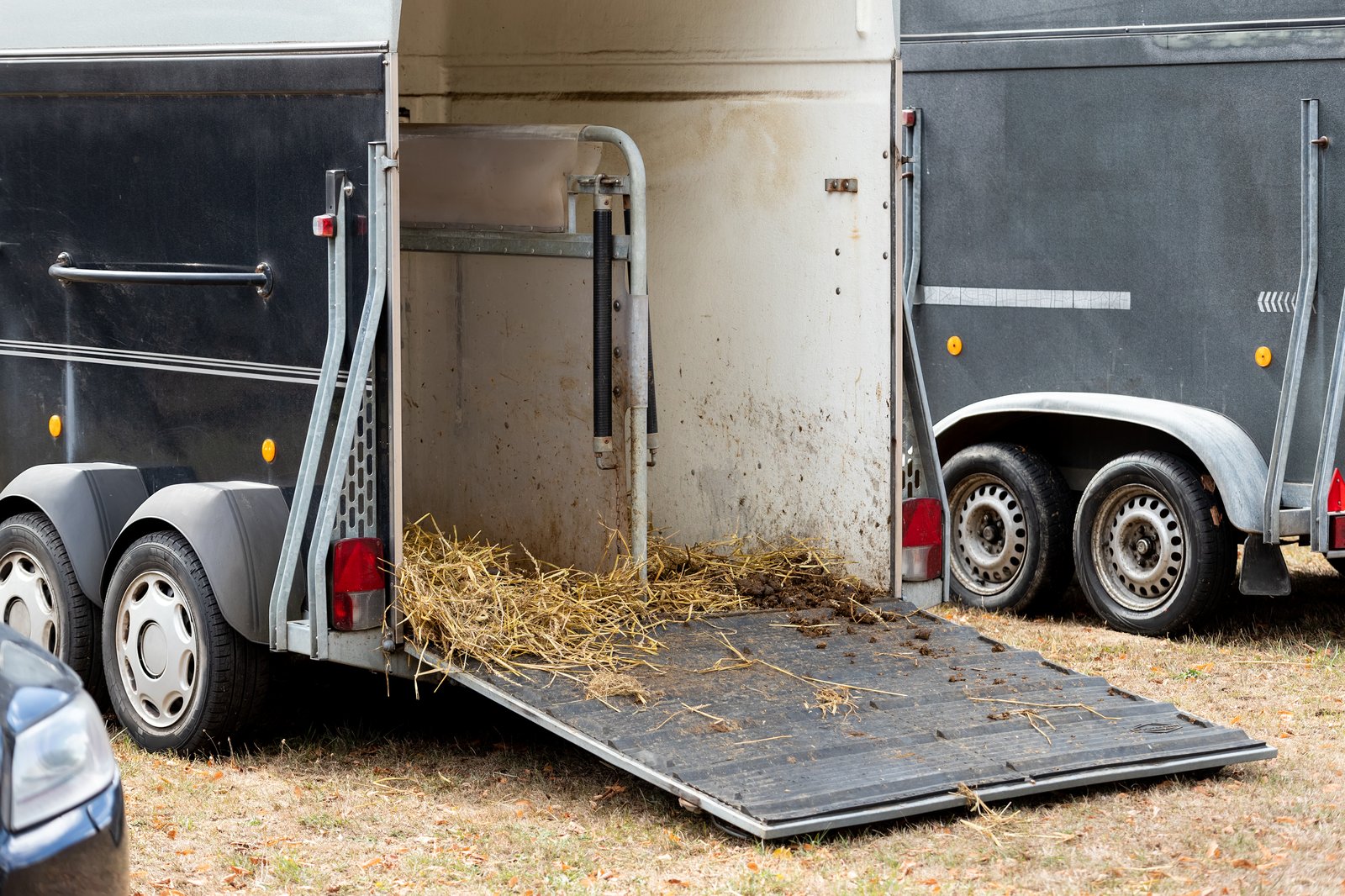

Knowing how to clean a horsebox properly makes returning a hired box quick and stress-free. It also protects the next horse, and it keeps the floor in good condition for years.
The good news is that it isn’t a big job. With the right kit and a simple routine, most boxes take 20–40 minutes after a normal day out.
This guide covers the kit you need, a step-by-step routine, which products to use and avoid, and a return-day checklist. It also explains when to disinfect and what to tell us.
Why it matters when you clean a horsebox
At Horsebox For Rent, every box is cleaned and safety-checked before each hire. So the aim on return isn’t a showroom finish.
Instead, it’s a box that’s empty, mucked out and swept, with nothing left behind. We’ll confirm what we expect at collection.
Even so, how you leave the box matters for three reasons.
- The floor. Urine and wet bedding left sitting on a floor cause damage over time. Floors are the part of a horsebox that matters most for safety.
- The next horse. Droppings, saliva and nasal discharge can carry infections. A swept, aired box is a healthier one.
- The handover. A tidy box means a quick, friendly return. With most hire firms, a box returned very dirty can mean a cleaning charge.
What you’ll need
Pack a small cleaning kit in the box before you set off. Then you can muck out as you go and finish quickly at the end.
- Muck skip, shovel and a stiff yard broom.
- Strong bin bags for wet bedding and rubbish.
- A bucket, sponge and a scrubbing brush for walls and partitions.
- A small hand brush for corners and the ramp edges.
- Warm water and a mild detergent.
- An equine-safe disinfectant, if you need to disinfect.
- Rubber gloves and a few cloths for the cab.
You’ll also want somewhere suitable to work. Ideally, that’s level ground at your yard, with room to lower the ramp fully, because you’ll need the light and the air.
How to clean a horsebox, step by step
Follow the same order every time. It’s quicker, and you won’t miss anything.
- Park safely. First choose level, firm ground, then lower the ramp so you have light and air.
- Take everything out. Haynets, buckets, rugs, tack, boots and rubbish all come out before you start.
- Remove droppings and wet bedding. Shovel them into the muck skip or bin bags, working from the front towards the ramp.
- Sweep the floor. Pay attention to corners, the edges of the partition and the base of the walls.
- Clear the ramp. Ramp matting traps muck and gravel in its grooves, so brush and scrape it clean.
- Wipe the walls, partitions and bars. Use warm water and mild detergent on dried muck, saliva and sweat marks.
- Check the tie rings and fittings. Also remove any string, baler twine or haynet remnants.
- Clean the cab. After that, clear rubbish, shake out the mats and wipe the dashboard and door handles.
- Let it air. Leave the ramp down and doors open for a while, where it’s safe, so the floor dries.
- Walk round once more. Finally, raise and secure the ramp.
Most of the effort to clean a horsebox goes into removing muck, not scrubbing. As a result, it’s far easier if you’ve mucked out during the day.
After a week or a month on hire
Longer hires build up more dust, hair and grime. So if you clean a horsebox at the end of a weekly or monthly hire, give it a little more time.
For example, wipe down the walls and partitions fully rather than spot-cleaning. Also brush hay dust out of the vents and window channels, and clean the cab properly, including the seats.
Then let everything dry thoroughly before you hand it back. A long hire usually needs closer to an hour than twenty minutes.
Should you wash it out with a hose?
Only lightly, and only where it’s needed. A gentle rinse of the horse area can help, but flooding the floor isn’t a good idea.
Avoid pressure washers unless we’ve agreed otherwise. They can force water into joints, under fixed matting and into electrical fittings.
Booking your next trip?
Every box is cleaned and safety-checked before each hire, and insurance is included. Daily, weekly and monthly hire with a clear, fixed quote. Call or WhatsApp 07450 483941.
Products to use, and the ones to avoid
The right products clean well without harming the box or the next horse. However, the wrong ones can be dangerous.
| Product | Good for | Watch out for |
|---|---|---|
| Warm water and mild detergent | Walls, partitions, bars and the cab | Rinse off residue, so horses don’t lick it |
| Equine-safe disinfectant | After illness or a vet hospital visit | Clean first, use the stated dilution and let it dry |
| Household bleach | Not recommended | Can react with ammonia from urine and give off harmful fumes |
| Strong solvents and degreasers | Not recommended | Can damage rubber matting, seals and paintwork |
| Scented sprays and air fresheners | Not recommended | Strong smells can irritate horses’ airways |
| Pressure washer | Only if agreed with us | Forces water into joints, matting and electrics |
Clean before you disinfect
Disinfectants work poorly on dirty surfaces, because muck and organic matter shield germs from the product.
So always remove droppings, sweep and wash first. Then apply disinfectant to clean surfaces, following the label exactly.
Keep dirty water out of ditches
Don’t let muck, dirty water or disinfectant run into ditches, drains or streams. Wash out where the water can soak away safely, or keep rinsing to a minimum.
The floor: the part that matters most
A horsebox floor carries a lot of moving weight, and it takes the worst of the urine and wet bedding. That’s why it deserves the most attention.
When you clean a horsebox, focus most of your effort here.
- Don’t lift fixed mats. If the matting is fixed down, leave it in place and clean the surface.
- Don’t flood it. Standing water can find its way into joints and under mats.
- Let it dry. Leave the box aired with the ramp down for a while, if it’s safe to do so.
- Report anything unusual. A soft patch, a lifted edge or a strong smell from under the mat should be mentioned at return.
In short, a dry, swept floor is the single most useful thing you can hand back.
Biosecurity: when to disinfect and what to tell us
Most hires only need a muck-out and sweep. However, some situations call for more.
Disinfect when
- Your horse has been coughing or has a nasal discharge.
- You’ve been to an equine hospital or a busy veterinary clinic.
- You’ve collected a horse of unknown health status, such as a new purchase.
- A horse on board has been unwell in any way.
How to disinfect properly
First clean a horsebox thoroughly, as above, because disinfectant can’t work through muck. Then apply an equine-safe product at the dilution on the label.
Also leave it on for the contact time the label states, wear gloves and keep the box well ventilated. Finally, rinse if the label says so, and let everything dry before the box is used again.
Always tell us
If your vet suspects anything contagious, such as strangles, tell us at return, or before if you can. It’s the responsible thing to do, and it lets us clean and disinfect thoroughly before the next horse.
Nobody will think less of you for mentioning it. In fact, it’s exactly how hire boxes stay safe for everyone. The British Horse Society has clear guidance on infectious diseases and biosecurity.
Fuel, damage and the return handover
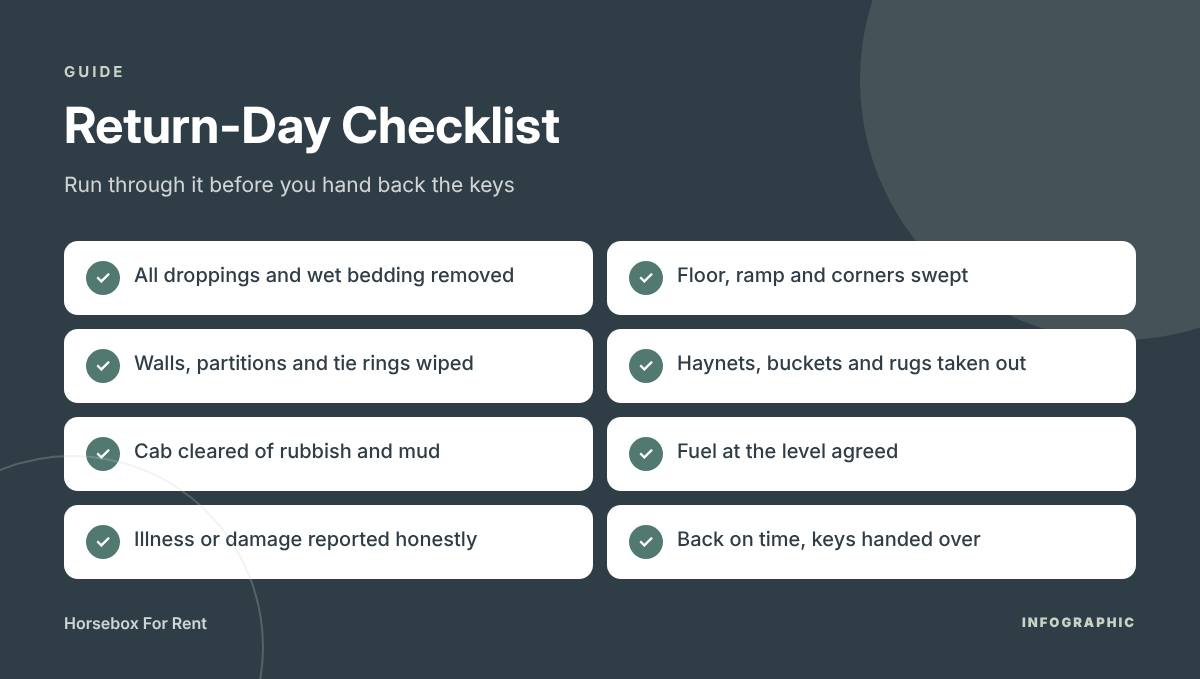
Cleaning is only part of a smooth return. In addition, a few other details make the handover quick and fair.
Fuel
Return the box with the fuel level you agreed at collection. Also fill up nearby rather than many miles away, so the gauge reads correctly.
Damage
If anything happened during the hire, say so at return. Show us what you noticed and when, since honesty makes everything simpler and small issues are easier to deal with early.
Photos
Take a few photos of the inside, outside and fuel gauge before you hand back the keys, because they’re useful for both of us.
Lost property
Check the cab pockets, the groom’s area and under the seats. After all, phones, purses and headcollars are the usual things left behind.
Timing
We’re open 8:00–18:00, seven days a week. Return at the time you agreed, and call if you’re running late.
Make it easier: clean as you go
The easiest way to clean a horsebox is to keep it tidy throughout the day. These habits cut the end-of-day job in half.
- Muck out at each stop. Two minutes with a shovel beats twenty at the end.
- Use haynets, not loose hay. Loose hay spreads everywhere and mixes with wet bedding.
- Bag rubbish straight away. Keep a bin bag in the cab, so wrappers and drinks never reach the floor.
- Change boots before you climb in. Muddy boots carry half a field into the cab.
- Pack the cleaning kit first. That way, it’s always to hand.
Riders near Little Amwell and Sawbridgeworth often travel on rural roads with muddy gateways. Keeping a stiff brush by the jockey door makes a real difference after wet days.
For general advice on travelling horses well, World Horse Welfare offers free guidance for owners.
Quick answers
Do I need to wash a hired horsebox before returning it?
Usually not a full wash. Remove all droppings and wet bedding, sweep out and take your kit. We’ll confirm what we expect at collection.
Can I use a pressure washer to clean a horsebox?
Only if we’ve agreed it. Pressure washers can force water into joints, under matting and into electrics.
What if my horse was ill during the hire?
Tell us at return, or earlier if you can. Then we can clean and disinfect thoroughly before the next horse.
Can I use bleach?
We don’t recommend it. Bleach can react with ammonia from urine and give off harmful fumes. Use an equine-safe disinfectant instead.
When can I return the box?
At the time you agreed when booking. We’re open 8:00–18:00, seven days a week.
A tidy box, a quick handover
Knowing how to clean a horsebox properly takes the stress out of return day. Muck out as you go, follow the same routine every time and leave the floor dry.
Then report anything unusual and hand back the keys with confidence. Find more help on our services page, in our FAQ and in the areas we cover.
Ready for your next hire?
Tell us your dates and the number of horses for a clear, fixed quote. Insurance is included, and every box is cleaned and safety-checked before it goes out. Call 07450 483941.