


Call us: 07450 483941


Horsebox hire vs owning is mostly a maths question. Owning looks cheap until you add up a full year of bills. Hiring looks dear until you count how often you really travel.
So this guide works like a calculator. You list every cost of owning a box, price the same year on hire, then divide one figure by the other.
After that, we run the numbers for three very different riders. Finally, a short checklist helps you decide.
How this horsebox hire vs owning calculator works
You only need three numbers, and rough figures are fine.
- A: your yearly cost of owning. Every bill in a year, used or idle, plus the value the box loses.
- B: your cost per hire outing. What a day, a weekend or a week on hire costs for your trips.
- C: the outings you’ll really make. Shows, clinics, lessons away, vet trips and yard moves, counted honestly.
Divide A by B, and you have your break-even point. That’s the number of hire days that cost the same as a year of owning. If C is lower, hiring wins; if it’s comfortably higher, owning starts to pay.
Fuel stays out of the sum, because you buy diesel either way. The same goes for entries and your horse’s own insurance, which keeps both sides of the horsebox hire vs owning comparison fair.
Step 1: list every cost of owning a horsebox
Most horsebox hire vs owning sums go wrong right here. People budget for the purchase and the insurance, then meet the rest one invoice at a time.
The figures below are typical UK ranges for a sound used box, not quotes. So check each one against your own situation.
Buying it: purchase price and lost value
Used 3.5t horseboxes typically sell for around £8,000–£35,000. Used 7.5t lorries typically run from about £15,000 to £60,000 or more, especially with living.
The price itself isn’t a yearly cost, but lost value is. Budget roughly £1,000–£3,000 a year for a 3.5t box and £1,500–£5,000 for a 7.5t, depending mostly on condition.
Paying for it: finance or lost savings
Borrowing £20,000 typically adds around £800–£2,000 a year in interest during the early years. Paying cash isn’t free either. For example, £20,000 in savings at 4% would earn about £800 a year.
Keeping it legal: insurance, tax and testing
Insurance typically costs £400–£1,000 a year for a 3.5t box and £600–£1,500 for a 7.5t. Vehicle tax typically runs from about £150 to £450, depending on the tax class. Look up the current vehicle tax rates on GOV.UK before you buy.
Testing is where size really matters. A 3.5t box takes a standard MOT from three years old, and the maximum test fee is under £60.
Over 3.5t, a box needs a plate showing its legal weights and an annual heavy vehicle test from its first birthday. With garage preparation and small fixes, £300–£1,000 a year is typical.
Keeping it safe: servicing, tyres and floor checks
Servicing typically costs £250–£600 a year on a 3.5t box and £500–£1,200 on a 7.5t. Tyres often age out before they wear out, and replacing them at around six years old averages £100–£500 a year.
The floor is the part experienced owners watch most. Urine and wet bedding attack it from below, so budget £150–£800 a year, averaged out, for inspections and repairs.
Also add specialist breakdown cover that recovers horses as well as the vehicle. That typically costs £100–£350 a year.
Keeping it somewhere: storage and cleaning
Some yards let liveries park a box for free, while others charge or simply lack the hardstanding. As a result, storage typically runs from nothing to around £1,500 a year, and cleaning supplies add £50–£250.
Driving it: licence costs for a 7.5t box
A 3.5t box is fine on an ordinary car licence. Anything heavier needs C1, and if you passed your car test before 1 January 1997, you probably hold it already.
Passed later? Then budget for a medical, a theory test, training and a practical test, typically £1,000–£2,000 or more. Our guide to horsebox licence rules covers the detail, and our horsebox and driver service starts from £220 if you’d rather not drive.
Your ownership worksheet: typical UK yearly ranges
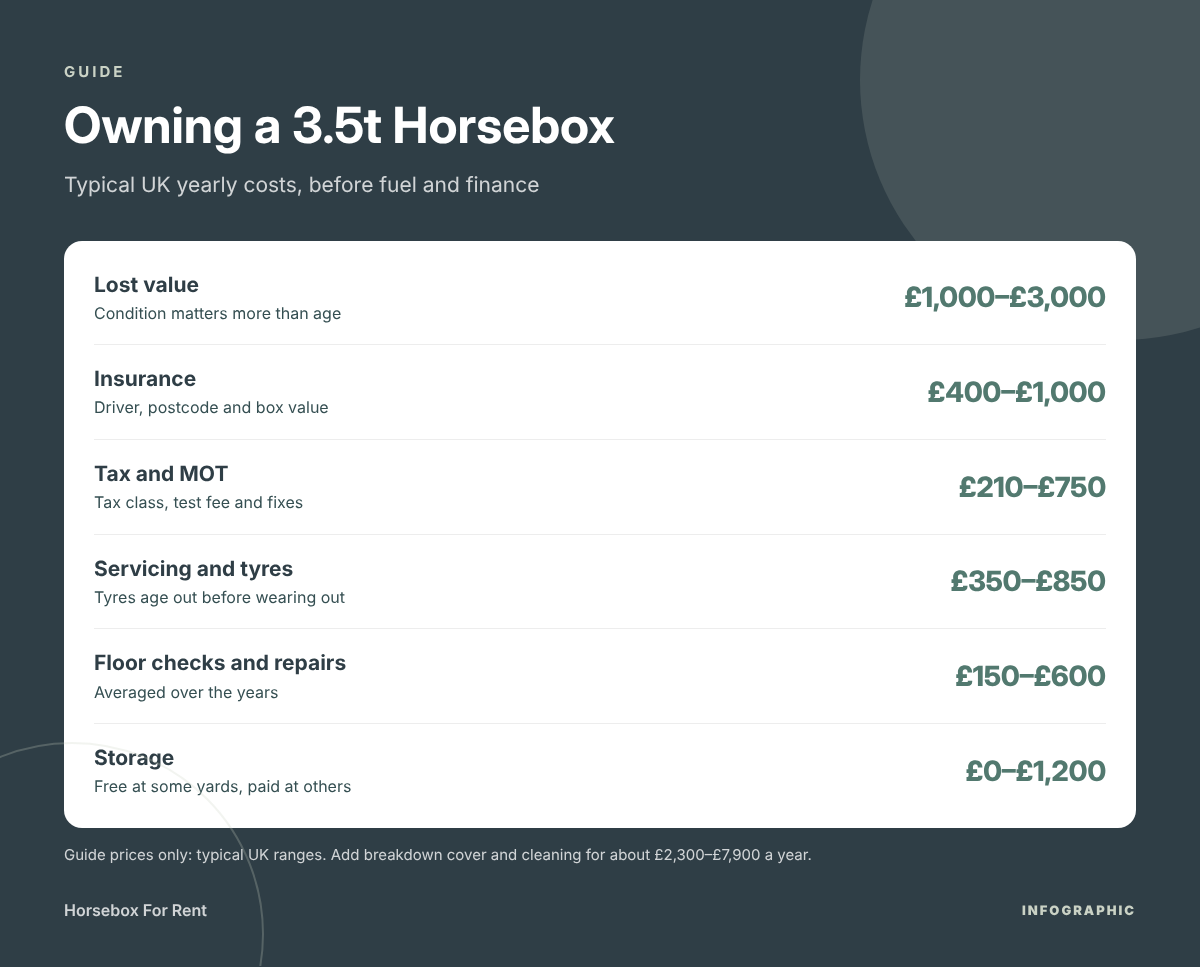
Here is the ownership side of horsebox hire vs owning in one place. Fill in the last column with your own quotes.
| Cost line | 3.5t box (a year) | 7.5t box (a year) | Your figure |
|---|---|---|---|
| Lost value (depreciation) | £1,000–£3,000 | £1,500–£5,000 | £______ |
| Insurance | £400–£1,000 | £600–£1,500 | £______ |
| Vehicle tax | £150–£450 | £150–£450 | £______ |
| MOT or heavy vehicle test, with fixes | £60–£300 | £300–£1,000 | £______ |
| Servicing | £250–£600 | £500–£1,200 | £______ |
| Tyres (averaged) | £100–£250 | £200–£500 | £______ |
| Floor and ramp checks and repairs | £150–£600 | £200–£800 | £______ |
| Breakdown cover with horse recovery | £100–£250 | £150–£350 | £______ |
| Storage | £0–£1,200 | £0–£1,500 | £______ |
| Cleaning | £50–£200 | £75–£250 | £______ |
| Typical yearly total | About £2,300–£7,900 | About £3,700–£12,600 | £______ |
Lost value, storage and the floor create the biggest swings, so two similar boxes can be thousands of pounds apart. If they apply to you, add finance and any C1 training on top.
Step 2: price the same year using hire
This is the other half of the horsebox hire vs owning sum. Here are our starting prices:
- 3.5t self-drive horsebox: from £120 a day.
- 5–7.5t horsebox: from £180 a day (C1 licence needed).
- Weekend hire, collect Friday and return Sunday: from £260.
- Weekly rental: from £480.
- Long-term hire: from £950 a month, with maintenance and servicing included.
Every hire includes insurance, and we clean and safety-check each box before handover. Fuel is separate, which is why it stays out of the sum.
Price each trip the way you’d book it, so a two-day show counts as one weekend hire. Our guide to what self-drive horsebox hire includes shows how to compare quotes fairly.
Want real numbers for your break-even sum?
Tell us your likely outings and the box size you need, and we’ll price them properly. Call or WhatsApp 07450 483941, any day from 8:00 to 18:00.
Step 3: find your break-even point
This is where horsebox hire vs owning stops being a hunch and becomes a number. Here are mid-range worksheet figures put through the formula.
- Mid-range 3.5t box: about £4,850 a year ÷ from £120 a day = about 40 hire days.
- Mid-range 7.5t lorry: about £7,800 a year ÷ from £180 a day = about 43 hire days.
In other words, you’d need roughly 40 days of travel a year before owning a typical box saves money. For most amateur riders, that means an outing in most weeks of the year.
What moves your number
- Finance. Add £1,200 of yearly interest to the 3.5t figure, and break-even rises to about 50 days.
- A higher hire quote. If your real day rate is £150, break-even falls to about 32 days.
- Free storage. Take £600 off the 3.5t figure, and break-even drops to about 35 days.
- A C1 course. £1,500 spread over five years adds £300 a year, or about two more days on a 7.5t.
So treat 40 as a guide, not a rule. Your own worksheet total is the figure that counts.
Horsebox hire vs owning for three types of rider
Here’s how horsebox hire vs owning plays out for three patterns of use. Each row uses the mid-range 3.5t figure and hire from £120 a day, unless stated.
| Rider | Outings a year | Hire cost | Owning a 3.5t (mid-range) | Owning cost per outing | Cheaper option |
|---|---|---|---|---|---|
| Occasional rider | 6 | from £720 | about £4,850 | about £808 | Hiring, by a long way |
| Regular competitor | 24 | from £2,880 | about £4,850 | about £202 | Hiring, in most cases |
| Yard owner or heavy user | about 100 | from £11,400 (long-term hire) | about £4,850 | about £49 | Owning, or long-term hire |
The occasional rider: six trips a year
Picture a rider near Braintree with two shows, two clinics and two vet visits. On hire, that year costs from £720, while owning works out at about £808 per trip.
Even a cheap, paid-off box struggles here. After all, the lowest worksheet total is still about £2,300.
The regular competitor: two trips a month
Twenty-four outings cost from £2,880 on day hire, nearly £2,000 less than a mid-range £4,850. Owning only wins at the very bottom of the range, with an older box, free parking and no surprise repairs.
Need a 5–7.5t box? Then 24 days from £180 comes to from £4,320, still well under £7,800. And if summer turns into every weekend, compare long-term hire for the competition season for those months.
The yard owner or heavy user
A yard travelling twice a week makes roughly 100 outings, or from £12,000 on 3.5t day hire. At that level, owning usually wins: about £49 an outing for a 3.5t, or £78 for a 7.5t. Heavy use does push servicing, tyres and lost value towards the top of the range.
Long-term hire is still worth pricing, because servicing is included and no capital is tied up. Also, if a heavier box is used for business, operator licence and tachograph rules may apply, so take advice first.
The East Anglia factor: winters, distances and parking
Local conditions nudge the horsebox hire vs owning balance too. Across Essex, Suffolk, Norfolk and Cambridgeshire, most outdoor competition falls between spring and early autumn.
So many owned boxes sit idle all winter, still costing insurance, tax and storage while road salt works on the chassis. Long runs across the region also add servicing and tyre wear, which on hire isn’t your bill.
Parking matters too, as many livery yards have little spare hardstanding. Whether you’re pricing horsebox hire in Hoddesdon or trips from Much Hadham, the worksheet works the same way.
Decision checklist: buy a box or keep hiring?
What the sums leave out
- Owning gives you short-notice freedom and one familiar box for your horse.
- Hiring gives you no resale risk, no garage bills and no winter storage.
- Owners spend time on weekly checks, cleaning and garage visits.
- Hirers need to plan, because popular summer weekends book up early.
Seven questions to answer honestly
Run through these before you view a single box. If you answer no to two or more, keep hiring for now.
- Will I travel at least 40 days a year, every year?
- Do I have secure, firm parking that’s free or cheap?
- Could I pay a surprise £1,000–£3,000 repair bill without cancelling my season?
- Do I hold the right licence, or will I pay for C1?
- Will someone check the tyres, lights and floor every week?
- Do I have a plan when the box is off the road?
- Will I keep it for five years or more?
Tick every one, and owning will probably suit you. Even then, many owners still hire a bigger box for a yard move, or use short-notice hire from £150 when theirs is in the garage.
Quick answers
What is the break-even point for horsebox hire vs owning?
For a mid-range 3.5t box, it’s about 40 hire days a year at from £120 a day. Finance, paid storage or big repairs push it higher.
Is a 7.5t box much dearer to own than a 3.5t?
Usually, yes. Typical yearly costs run about £3,700–£12,600, against £2,300–£7,900 for a 3.5t. That already includes the annual heavy vehicle test, but C1 training may come on top.
Can I own a small box and hire a bigger one?
Yes, and it’s a sensible mix. Our 5–7.5t boxes start from £180 a day if you hold C1, while the horsebox and driver service starts from £220.
Is long-term hire a middle ground?
It can be. Long-term hire starts from £950 a month with maintenance and servicing included, which suits a busy season without buying.
Run your own numbers, then decide
The horsebox hire vs owning question rarely has one answer for everyone. However, it nearly always has a clear answer for you once A, B and C are on paper.
In short, under 40 trips a year, hiring usually wins. See every option on our horsebox hire services page, browse the areas we cover in Essex and East Anglia, or send us your dates.
Let’s price your year
Send us your likely outings and box size, and we’ll quote day, weekend, weekly or long-term hire. Call or WhatsApp 07450 483941.